


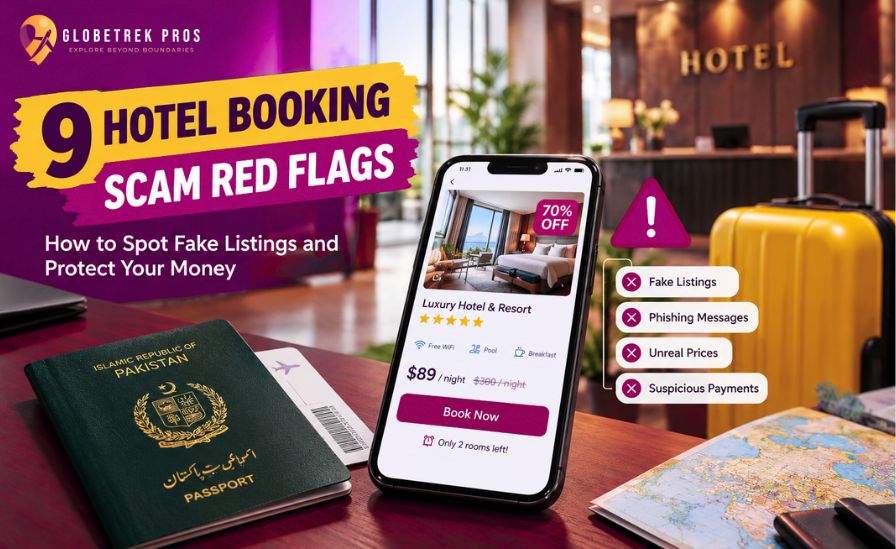
Hotel Booking Scams in 2026: 9 Red Flags Every Traveler Should Know
Planning an international trip is exciting, but a fake hotel listing or fraudulent payment request can turn your dream holiday into an expensive mistake. As more travellers book accommodation online, scammers are using convincing websites, copied hotel photographs, fake customer support messages and urgent payment requests to deceive unsuspecting guests.
In October 2026, the European Commission opened formal proceedings to investigate how Booking.com addresses fraudulent listings, phishing scams and the transparency of paid promotional listings. This is an ongoing investigation, not a finding that the company has violated the law. However, it highlights why travellers should carefully verify accommodation and payment requests before booking.
For Pakistani travellers planning trips to Europe, Türkiye, the UAE, Saudi Arabia or other international destinations, knowing how to identify hotel booking scams is an important part of travel planning.
In this guide, GlobeTrek Pros explains nine warning signs to watch for, how to verify a hotel before paying, and what to do if you suspect a booking scam.
What Are Hotel Booking Scams?
Hotel booking scams involve misleading or fraudulent offers designed to steal money, personal information or payment details from travellers. Scammers may pretend to represent a genuine hotel, impersonate a booking platform, advertise accommodation that does not exist, or send fake messages about an existing reservation.
These scams can occur through search engines, social media advertisements, fake hotel websites, email, WhatsApp and even compromised accommodation-provider accounts.
A professional-looking website or a message containing your correct travel dates does not automatically mean the offer is legitimate.
9 Red Flags Every Traveler Should Know
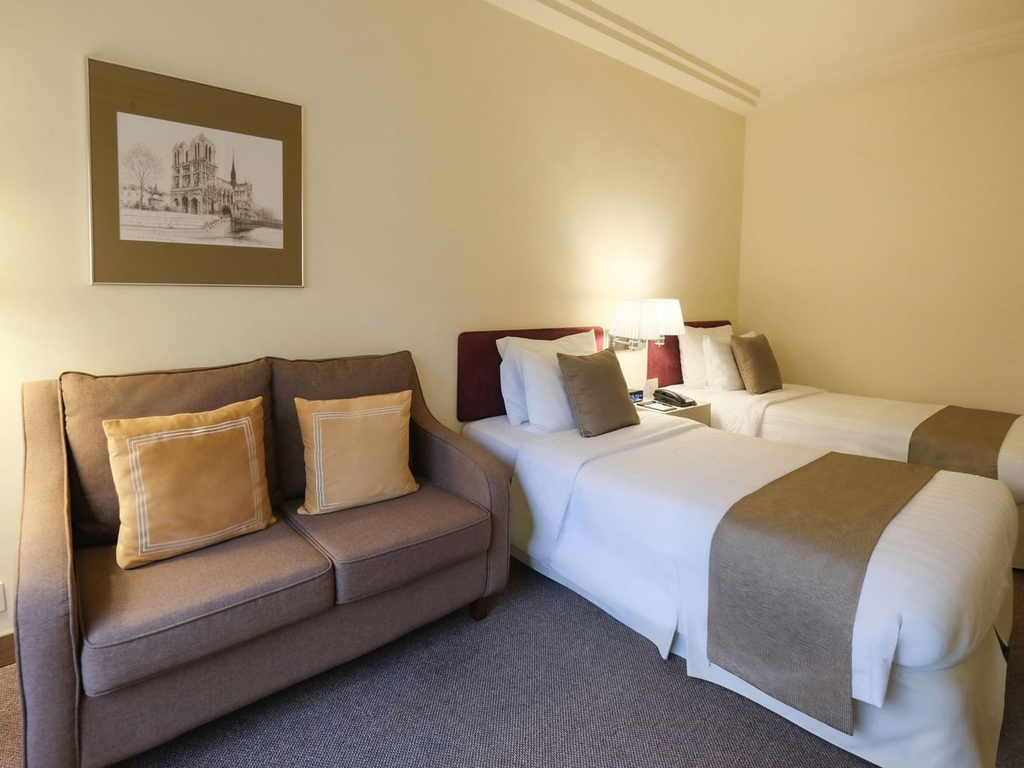
1. The Hotel Price Is Unusually Low
An exceptionally cheap room at a luxury hotel can be tempting, particularly when you are trying to reduce your travel budget. However, scammers often use unrealistic discounts to pressure travellers into paying quickly.
Before accepting an offer, compare the same property and room category across reputable booking platforms and the hotel’s official website. Check whether the advertised price includes taxes, service charges, breakfast and other mandatory fees.
A low price alone does not prove fraud, but a price far below comparable offers deserves additional verification.
2. The Website Address Looks Slightly Different
Fraudulent websites sometimes copy the branding, photographs and layout of genuine hotel websites or booking platforms. Their web addresses may contain extra words, unusual characters, misspellings or misleading domain names.
Before entering personal or payment details:
- Check the complete website address carefully.
- Access the booking platform by typing its known address directly into your browser or using its official app.
- Verify the hotel’s official website through independent search results or trusted directories.
- Do not assume that a prominent search advertisement is automatically genuine.
An HTTPS connection protects data in transit, but it does not prove that a website or business is legitimate.
3. Someone Requests Payment Outside the Official Booking System
A hotel representative may contact you and ask you to transfer money to a personal bank account, send funds through an unfamiliar payment service, or pay using cryptocurrency or gift cards.
Treat unexpected requests to move a transaction outside the agreed booking process as a serious warning sign.
Before paying, review your reservation’s payment terms and contact the property or booking platform through independently verified contact details. Do not rely solely on the phone number or payment link provided in a suspicious message.
4. You Receive an Urgent Message About Your Reservation
A particularly convincing scam may claim that your reservation will be cancelled unless you verify your card details or make an additional payment immediately.
The message might arrive by email, text or WhatsApp. In some cases, scammers may know the guest’s name, hotel, booking dates and reservation details, making the communication appear genuine.
Do not click the supplied link or enter your financial information. Instead, open the official booking app or website independently and check your reservation status.
Urgency is a common manipulation tactic. Verify first and pay only when the request is confirmed through a trusted channel.
5. The Hotel Has Few Reviews or Suspicious Feedback
A newly listed property with no reviews is not necessarily fraudulent. However, an absence of reliable information makes it harder to assess the accommodation.
Look for reviews across multiple independent sources and prioritise recent, detailed feedback. Check whether reviewers mention specific aspects of their stays, such as room cleanliness, check-in procedures, location and customer service.
Be cautious when numerous reviews use nearly identical wording, appear unusually generic, or describe experiences that seem inconsistent with the property’s photographs.
You can also search the hotel name alongside terms such as “complaint,” “scam” or “booking problem.”
6. The Hotel Photographs Appear Elsewhere
Scammers may copy photographs from legitimate hotels, property rental websites or social media pages to make fake listings look authentic.
If you are unsure about a property, use a reverse image search on its photographs. Compare the results with the hotel’s official website and other independent listings.
Pay attention to inconsistencies in the property name, room layout, location, amenities and building exterior.
Photographs appearing elsewhere do not automatically indicate fraud, because hotels commonly reuse their own promotional images. The important question is whether the images genuinely belong to the property being advertised.
7. The Cancellation and Refund Policy Is Unclear
Before paying, make sure you understand the cancellation deadline, refund conditions, deposit requirements and any non-refundable charges.
Be cautious if a seller refuses to provide written terms, changes the conditions during the payment process, or promises a refund without explaining how it works.
Save a copy of the booking confirmation and the applicable cancellation policy. If you book through a third-party platform, check whether your reservation is managed by the platform or directly by the accommodation provider.
Clear terms do not guarantee a scam-free booking, but they help you understand your rights and identify inconsistencies.
8. A Social Media Account Offers a Deal That Seems Too Good to Be True
Fake hotel pages and impersonated travel businesses may advertise discounted holidays, limited-time deals or giveaways. Their posts can include stolen photographs, copied logos and fabricated customer testimonials.
Before sending money to a social media seller:
- Check the account’s history and consistency of business information.
- Verify its official website and contact details independently.
- Look for credible reviews outside its own social media page.
- Request a written quotation and complete booking terms.
- Confirm the identity of the business receiving the payment.
A verified-looking profile or a large follower count should not be treated as proof of legitimacy.
9. You Are Pressured to Share Sensitive Information
A genuine reservation may require certain guest details, but an unexpected request for banking credentials, account passwords, one-time passwords (OTPs) or complete card security information should raise immediate concern.
Never share an OTP or banking password with someone claiming to be a hotel employee or booking agent. Avoid entering sensitive details through links sent in unsolicited messages.
Use secure payment methods offered through the booking provider’s official process, and enable two-factor authentication on your booking and email accounts where available.
How Pakistani Travellers Can Verify a Hotel Before Paying
If you are booking accommodation for a Schengen trip, a visit to the UAE, a family holiday in Türkiye or a stay near the holy sites in Saudi Arabia, use this checklist before making a payment.
| What to check | What to do |
|---|---|
| Property identity | Confirm the hotel’s name, address and official contact information. |
| Website or app | Access the booking service independently rather than through an unexpected link. |
| Reviews | Compare recent reviews across multiple reliable sources. |
| Total cost | Check taxes, deposits, service charges and any additional fees. |
| Payment method | Follow the documented payment terms and avoid unexplained requests for off-platform transfers. |
| Cancellation policy | Save the cancellation deadline and refund conditions. |
| Reservation status | Contact the hotel using independently verified details to confirm the booking if anything seems unusual. |
| Payment evidence | Keep receipts, confirmation emails, booking references and relevant correspondence. |
For international trips, also consider the location of the hotel relative to airports, public transport, attractions and your planned activities. A genuine property in an unsuitable location can still cause unnecessary travel costs.
What to Do If You Think You Have Been Scammed
If you suspect a fraudulent hotel booking, act quickly. The steps you take may help limit financial loss and protect your personal information.
1. Stop communicating through suspicious links. Do not send additional money or provide further personal details until the request has been verified.
2. Contact your bank or card provider. If you have shared card details or made a suspicious payment, contact your bank immediately using its official contact information. Ask whether the card should be blocked and whether the transaction can be disputed or recalled.
3. Secure your accounts. If you entered a password on a suspicious website, change it immediately on the genuine service and anywhere else you reused it. Enable two-factor authentication where possible.
4. Contact the booking platform or hotel directly. Use independently verified contact details to check the reservation and report suspicious messages or listings.
5. Keep evidence. Save payment receipts, screenshots, emails, WhatsApp messages, website addresses and booking confirmations. These records may help your bank, the booking platform or law enforcement investigate the incident.
6. Report the incident. If you are in Pakistan and have suffered financial loss or experienced online fraud, contact your bank and the relevant Pakistani cybercrime or law-enforcement reporting authority through its official channels.
Do not assume that a payment can always be recovered. Reporting the issue quickly is important, but the outcome depends on the payment method and circumstances.
Is Booking Through a Travel Agency Safer Than Booking Yourself?
Both independent booking and using a travel agency can work well. The key is to verify the provider, understand the terms and keep a clear record of your transaction.
When booking independently, you are responsible for checking the accommodation, payment process, cancellation conditions and reservation details.
A reputable travel agency can help compare suitable accommodation, explain booking conditions, coordinate reservations and provide a contact point when you need assistance. However, using an agency does not automatically eliminate fraud risk. Travellers should still verify the agency’s identity, request written booking confirmations and keep payment receipts.
At GlobeTrek Pros, travellers can seek assistance with travel planning and booking coordination. Whatever option you choose, make sure the accommodation details, total charges and payment conditions are documented before you commit.
Frequently Asked Questions
1. How can I tell if a hotel booking website is fake?
Check the complete web address, verify the business independently, compare the offer with other reputable sources and review the payment and cancellation terms. Be cautious about unrealistic discounts, suspicious links and requests for unusual payment methods.
2. Is it safe to book a hotel through WhatsApp?
WhatsApp can be used for legitimate communication, but the platform itself does not prove that a hotel or seller is genuine. Verify the property’s identity and confirm payment instructions through independently sourced contact details before sending money.
3. What should I do if a hotel asks me to pay again after booking?
Do not immediately make a second payment. Check the reservation directly through the official booking platform and contact the property using verified contact details. If the request cannot be confirmed, report it to the booking provider.
4. Can I recover money lost in a hotel booking scam?
Possibly, but recovery is not guaranteed. Contact your bank or payment provider immediately, report the transaction and preserve all evidence. The available options depend on how you paid and the details of the case.
5. Is using a travel agency enough to avoid hotel booking scams?
No. A reputable agency may provide useful booking support, but travellers should still verify the agency, check accommodation details, read the booking conditions and retain written confirmations and receipts.
Hotel booking scams can affect travellers at any budget level, and convincing messages or professional-looking websites are not always what they seem. The best protection is to slow down, verify the property independently and never let an urgent payment request override your judgement.
For Pakistani travellers planning an international holiday, a few careful checks before paying can help prevent financial loss and unnecessary disruption. If you need assistance organising your next trip, GlobeTrek Pros can help you plan with greater clarity and confidence.
Plan your next journey with GlobeTrek Pros. Explore beyond boundaries — with informed decisions at every step.

