


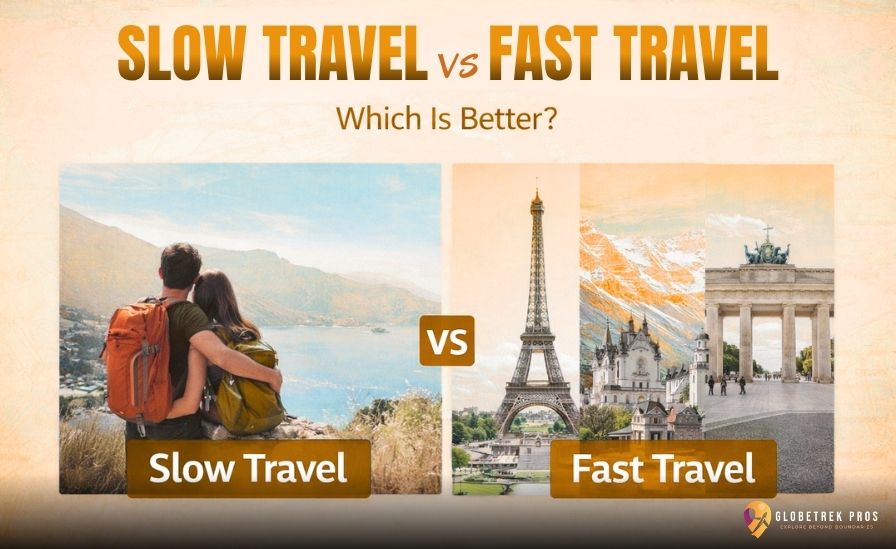
Slow Travel vs Fast Travel: Which Is Better?
Travel styles have evolved over the years, and today, travelers are often choosing between two popular approaches: slow travel and fast travel. Both offer unique experiences, but the right choice depends on your travel goals, time, and preferences.
At GlobeTrek Pros, many travelers ask us which style suits them best. Understanding the difference can help you plan a more enjoyable and meaningful journey.
What Is Slow Travel?
Slow travel focuses on spending more time in fewer destinations. Instead of rushing through multiple cities, travelers choose to stay longer in one place and explore it deeply.
This approach allows you to experience local culture, food, and lifestyle in a more authentic way.
For example, instead of visiting three countries in one week, a slow traveler might spend the entire trip exploring one city in Italy or relaxing in a coastal town in Spain.
Benefits of Slow Travel
Slow travel offers a more relaxed and immersive experience. It reduces travel stress and allows you to enjoy each destination at your own pace.
You get more time to connect with local culture, avoid tourist crowds, and create meaningful memories.
It is also ideal for honeymoon travelers, families, and those looking for comfort and flexibility.

What Is Fast Travel?
Fast travel, on the other hand, focuses on covering multiple destinations in a limited time. It is perfect for travelers who want to explore as much as possible within a short trip.
For example, visiting France, Switzerland, and Germany in one itinerary is considered fast travel.
This style is often seen in group tours and fixed travel packages.
Benefits of Fast Travel
Fast travel allows you to visit multiple countries and landmarks in one trip. It is ideal for first-time travelers who want to see popular destinations quickly.
It also works well for people with limited vacation time.
Structured itineraries make planning easier and ensure you don’t miss major attractions.
Slow Travel vs Fast Travel – Key Differences
The main difference lies in pace and experience.
Slow travel focuses on depth, relaxation, and cultural immersion.
Fast travel focuses on variety, speed, and covering more destinations.
Slow travel offers flexibility, while fast travel usually follows a fixed schedule.
Your choice depends on whether you value experiences or variety.
Which Travel Style Is Better?
There is no single answer to which travel style is better.
Choose slow travel if you prefer relaxed trips, deeper experiences, and flexibility.
Choose fast travel if you want to explore multiple destinations in a short time and maximize your itinerary.
At GlobeTrek Pros, we help travelers choose the right travel style based on their budget, time, and preferences.
FAQs – Slow Travel vs Fast Travel
1. What is the main difference between slow travel and fast travel?
Slow travel focuses on spending more time in fewer places, while fast travel is about visiting multiple destinations in a short period.
2. Which travel style is better for first-time travelers?
Fast travel is often better for first-time travelers who want to explore multiple destinations quickly.
3. Is slow travel more expensive than fast travel?
Not necessarily. Slow travel can sometimes be more cost-effective as it reduces frequent transportation and allows better budgeting.
4. Which travel style is best for relaxation?
Slow travel is ideal for relaxation because it allows more time to enjoy each destination without rushing.
5. Can I combine slow and fast travel in one trip?
Yes, many travelers combine both styles by exploring one destination in depth while also visiting a few nearby places.
Both slow travel and fast travel offer unique advantages. The best option depends on your travel goals and expectations.
Whether you prefer a relaxing getaway or an action-packed itinerary, proper planning is the key to a successful trip.
If you are unsure which travel style suits you best, GlobeTrek Pros can help you design a travel experience that matches your needs and ensures a smooth and enjoyable journey.

